
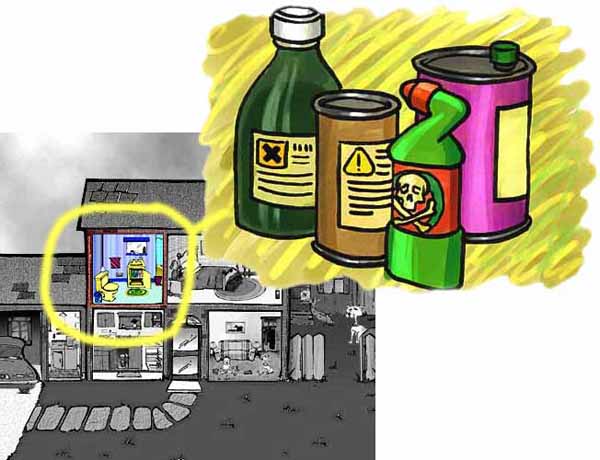

Chemicals, hazardous substances, toxic compounds: all the poisons in the bathroom
So let’s discover the potential dangers lurking in our bathrooms , ready to endanger our health and that of our children if not stored and used properly. As we’ll see, to our surprise, these chemicals are found in commonly used products.
Air fresheners
These chemicals are used to deodorize and freshen the air in various rooms in the home: not only the bathroom, but also kitchens, living rooms, bedrooms, and utility rooms (eg, laundry rooms or anterooms).
There are numerous and varied air fresheners available on the market, and consequently, the chemicals they contain are different. Nonetheless, it can be said that most products contain at least one (or more) of these basic “ingredients” : formaldehyde , petroleum distillates, volatile organic compounds (VOCs), limonene , p-dichlorobenzene , and, in the case of spray cans, propellant gases. This last category of products, in particular, is highly flammable , so sprays should not be used near open flames, such as, for example, near lit decorative candles in the bathroom. Another potential fire hazard, in this case, is gas boilers.
The chemicals contained in air fresheners are highly irritating to the eyes, respiratory tract, and skin. For this reason, the products should be sprayed into the air, not onto surfaces (which could damage them), and certainly not onto the skin. Furthermore, solid products contained in egg- or cone-shaped diffusers, for example, can cause poisoning and even death if ingested. Therefore, it’s important to keep these products well out of reach not only of children but also of pets. The ideal location for these diffusers is, for example, on top of a closet or cabinet.
Even if you take all the necessary precautions, it’s important to remember that air fresheners are far from harmless . The substances they contain can trigger dangerous allergic reactions , worsen conditions, and even cause respiratory problems. Those who suffer from asthma may also be adversely affected by these substances and experience sudden breathing attacks. Common side effects associated with the use of air fresheners include headaches, dizziness, vertigo, eye irritation and watery eyes, and, in more severe cases, even temporary memory loss.
To avoid all the above problems, it’s recommended to frequently ventilate the rooms where these deodorizing products are used. Often, simply remembering to change the air every now and then is enough to prevent unpleasant odors, without resorting to chemicals—which, moreover, mask odors but don’t eliminate them. A good alternative is natural deodorants : for example, fresh flowers, vanilla pods, citrus peels placed on radiators, or even small bowls of baking soda, a harmless substance that effectively absorbs odors.
Drain unblockers
These products are used to treat blocked drains in sinks, bathtubs, or showers. Most of these drain cleaners are based on sulfuric acid or, in some cases, caustic soda , a powerful corrosive alkaline substance. These compounds can release dangerous toxic gases ; on the skin, they cause varying degrees of serious damage and, if they come into contact with the eyes, even blindness. If ingested, these substances can even cause death.
To avoid any problems, it’s always a good idea to wear protective gloves when using these drain cleaners and, if using products that require boiling water, a mask that covers your eyes and mouth. It’s good practice to keep doors and windows wide open during use to prevent toxic fumes from building up in the air.
Furthermore, drain cleaners must never, under any circumstances, be used in conjunction with other chemical products (for example ammonia or other detergents) since the substances they contain could trigger sudden and uncontrollable chemical reactions .
The use of chemical drain cleaners should be limited as much as possible, not only because of the risk of poisoning, but also because these formulations are extremely polluting to the environment. Furthermore, they are quite expensive and, over time, their aggressiveness can seriously damage pipes.
There are several natural methods recommended for unclogging household drains, which are equally effective but certainly less dangerous. For example, preventing blockages can be achieved simply by occasionally pouring boiling water and salt into the pipes; pasta cooking water, for example, is a great option. If a blockage is present, it’s recommended to pour boiling water and baking soda down the drain, or boiling vinegar mixed with salt.
Toilet cleaners and descalers
These products, usually liquid, are used to clean and sanitize the toilet, or to remove limescale and film buildup that forms on the ceramic surface. The hazardous substances they contain are typically hydrochloric acid , bleach ( sodium hypochlorite ), caustic soda , and other corrosive products; they may also contain compounds with antibacterial properties.
The main dangers posed by toilet bowl cleaners include irritation to the nose, eyes, and mouth caused by fumes, and burns from skin contact. An important recommendation: even if used on the same fixture, never use a descaling product and a deodorizing product at the same time. This can trigger chemical reactions that release dangerous toxic gases into the air.
As a precaution, it’s always best to keep windows open when using these products. It’s good practice to always wear gloves and, if necessary, a mask. In case of accidental contact with skin or eyes, rinse immediately with plenty of water. After use, it’s recommended to allow air to circulate freely and, if necessary, use a fan to allow the fumes to dissipate more quickly.
Antibacterial detergents
These surface cleaning products are used to sanitize bathroom fixtures, floors, and other bathroom fixtures. They are typically liquid products that can be diluted with water or sprayed directly onto surfaces.
A wide variety of these products are available on the market, but they all contain chemicals that are potentially dangerous if inhaled or, worse, ingested. Specifically, cleaning products are based on water as the solvent, to which antibacterial substances (eg, quaternary ammonium salts , phenolic compounds , etc.), surfactants, and various fragrances are added. When using antibacterial detergents, it’s best to always wear rubber gloves and, if possible, keep windows and doors open to avoid breathing in the fumes.
Mold Removal Products
The bathroom, along with the kitchen and basement, is one of the rooms in the house most prone to mold growth . Small dark spots may appear on the shower tray or curtain, or between the tiles around the bathtub, which later spread and merge together. Mold has now formed, and it must be removed to prevent its further spread .
There are products specifically formulated for mold removal, available commercially in both liquid and spray form. The active ingredients with anti-mold action include, for example, alkyl dimethyl benzyl ammonium chloride and other chlorine-based compounds ( chlorinated solvents ). Anti-mold products can be extremely caustic and cause skin burns; therefore, it is always advisable to wear rubber gloves when using them. In case of accidental skin contact, rinse immediately with plenty of water.
Rather than having to fight mold, it’s definitely better to try to prevent it from forming . To do this, always open the windows wide after showering or bathing to allow the humidity to escape. A dehumidifier is highly recommended, especially for bathrooms without windows. The use of anti-mold fixatives, paints, or wall paints that prevent spores from taking root is also particularly recommended. To prevent mold from forming on the shower curtain , remember not to leave it rolled up at the bottom of the support tube when wet, but to open it completely so that any residual water evaporates.
To learn more about the hidden dangers in your bathroom
La Stampa – Air fresheners can trigger allergies, and not only that.
Home Ecology – Eco-Friendly Drain Cleaners: Natural Solutions for Unclogging Drains
All Green – Natural Drain Unblocker: Eco-Friendly Solutions for Sink Clogs
CasaleInforma.it – Most common disinfectants and how to use them (PDF document)
Dettol – Cleaning Tips
Comefaretutto.it – How to Make a Lavender Mold-Reducing Spray for Your Bathroom