

Causes of anxiety in children 1
Manifestations of anxiety in children 2
Tips for Parents with Anxious Children 3
Therapies for anxiety in children 4
Understanding anxiety issues in children 4
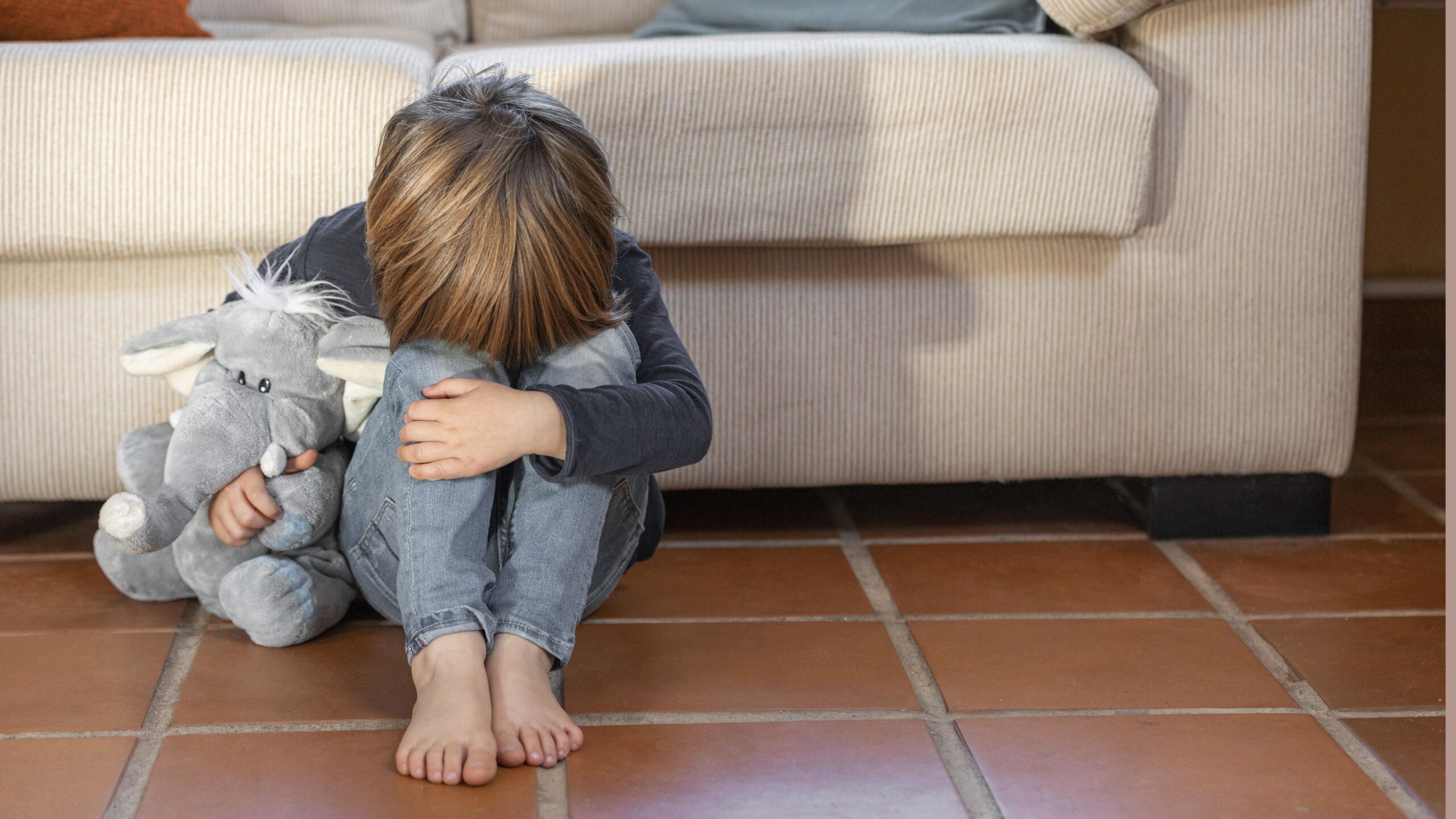
In recent years, the number of children and adolescents suffering from specific anxiety disorders has reached a socially alarming level. It appears that 21% of children aged 8, 12, and 17 exhibit symptoms and disorders that warrant a diagnosis of anxiety.
Anxiety is normal and predictable at certain stages of development, such as separation from parents or when children are left alone in the dark or during a thunderstorm . Anxiety becomes more severe if it interferes with daily activities, during school, or when in the company of other children. Anxiety disorders in young children often manifest with symptoms such as headache, vomiting, and abdominal pain.
Starting in pre-adolescence (around 12/13 years old), however, crises take on the form of constant demands, displays of anger, and behavioral changes . What is most concerning today are separation anxiety , generalized anxiety, specific phobias, and obsessive-compulsive disorders. Some children feel the need to constantly wash their hands, others want their stuffed animals always in the same order, and still others always want to wear the same shoes. Unfortunately, however, the anxiety that affects this age group is often misunderstood and confused with other disorders.
Causes of anxiety in children
The causes of the increase in these disorders are entirely rooted in the personal histories of these children and adolescents and their parents. Society also plays a significant role: civilization has changed, moving from a rural to an industrial world in just a few years, and marriage has also changed. Separations and divorces are exploding, and new forms of extended family are being created.
Meanwhile, the littlest ones somatize, that is, they transform their anxiety and distress into symptoms. Children often manifest their distress with fits of desperate crying, psychomotor agitation, bedwetting, nausea, and vomiting. While older children can’t sleep, have nightmares, faint, experience palpitations, and dizziness. The relationship with their parents is often the main cause of this childhood upheaval.
First, adults are overprotective of their children, a consequence of often being absent from their children’s lives. A father or mother who is only with their children on weekends develops strong feelings of guilt, leading them to assume a pathogenic (sick) presence during the few hours they share. Then, during the week, they slip into a routine in which the father, who comes home, ignores the child. At this point, the child feels a sense of loss, whereas the child should be able to count on their parents constantly, perhaps for half an hour a day, but consistently.
Furthermore, adults no longer know how to say “no ,” the kind of “no” that should be said to help children develop a personality , that necessary emotional autonomy. Other times, neuroses are transmitted directly from mother to child, even during breastfeeding, in a mechanism that psychiatry calls subliminal and which can compromise childhood and adolescence. This happens because, when infants are breastfed, the mother is the main transmitter of anxiety.
It’s up to her, as the child grows older, to teach him how to manage his emotions by involving his children in all the mechanisms of life. But even an anxious, apprehensive father who can’t control himself “educates” his child to be anxious, transmitting it to him, and the child learns this way of thinking and transfers it to everything.
Manifestations of anxiety in children
Anxiety disorders in children are classified into:
- Separation anxiety. In children, separation anxiety is a fearful reaction they experience when separated from their caregivers (parents, grandparents, family members). This disorder accompanies situations of loss or absence experienced at various times and represents a fundamental step in the child’s growth, which is overcome with the progression of cognitive processes and the acquisition of emotional security. It usually appears starting at 5/6 months and lasts until 14/20 months, becoming increasingly less frequent and tending to disappear. Separation anxiety becomes a full-blown disorder when the symptoms are excessive and tend to last a long time . In these cases, children will be extremely homesick when they are away from home, will be very afraid of not seeing their parents again, and will avoid moving around alone. They may also be afraid of sleeping alone. Sometimes the disorder occurs following a stressful event that triggers this reaction, such as a move, a change of school, a parent’s separation, or a bereavement.
- Generalized anxiety disorder. Generalized anxiety disorder is characterized by the presence of excessive anxiety and worry for a period of at least six months. The severity, frequency, or duration of the worry is far greater than the situation warrants. Among the most common symptoms, children experience motor tension, hyperactivity, poor concentration , easy distractibility, palpitations, and sweating. Children suffering from generalized anxiety fear making mistakes in everything they do, tear up their notebooks during homework, stay away from sports activities for fear of failure, and frequently complain of stomachaches, headaches, and vomiting.
- Phobias (or fears). Phobias are unjustified fears of an object or event , and contact with these situations generates a reaction of intense anguish. The American classification distinguishes social phobia, which consists of a persistent and irrational fear of situations in which the subject is exposed to the potential careful observation of others. Children with this disorder are usually unable to speak in front of others, eat in company, or answer simple questions, for example when called to the blackboard by the teacher. Simple fears, on the other hand, represent an almost constant event in the child’s growth due to their frequency , starting with the fear of the dark , and moving on to the fear of biting animals, ghosts, and ogres . These forms of phobia are usually accompanied by tachycardia, sweating, and difficulty speaking , but also by outbursts of anger, stiffening, and panic attacks. In most cases, phobias disappear on their own by age 7 or 8, but in some children they can persist. Sometimes families underestimate these disorders and think that direct contact with the object that causes fear is the best course of action. This isn’t the case; dialogue is certainly more effective, as it helps parents understand the underlying cause.
- Obsessive-compulsive disorder. This type of disorder affects one in seven children and is characterized by obsessions (intrusive and persistent thoughts) and/or compulsions (continuous rituals) that aim to neutralize and dispel anxiety. For example, some children must constantly wash their hands , while others must touch a certain object before doing something. As with all anxiety disorders, they often resolve on their own by age 7 or 8. However, when these symptoms persist, it is necessary to examine the personality structure, as they may be hiding psychotic issues.
Advice for parents with anxious children
Specialists in the field, psychologists and child neuropsychiatrists, have given some advice that can help prevent the onset of serious anxiety phenomena in children .
Promote and enhance all the places and opportunities for children’s socialization. For example, school, sports, youth clubs, and associations.
Never let yourself be overwhelmed or overwhelmed by feelings of guilt toward your children; try to make them aware of the mechanisms of their own lives. It’s important for adults to know how to say “no” at the right time: don’t be afraid of appearing too strict as educators for their children’s development.
Be careful to control and treat your anxieties and neuroses: direct transmission from parents to children is the most common and serious. Maintain a consistent parenting style, meaning consistently giving similar responses to similar behaviors.
Warning signs that reveal anxiety in children
Warning signs are those behaviors or attitudes that reveal the child’s discomfort:
- if the child has feeding or sleeping disorders at 1 year old
- if at 2 or 3 years old the child has difficulty separating from his parents and facing entering nursery school
- if at 2 or 3 years old the child has a language delay not due to mechanical causes
- if by the age of 5 he has not achieved sphincter control (he is able to poop and pee without a diaper), especially during the day
- if from 2 years onwards he is too restless and too calm
Therapies for anxiety in children
The most commonly used psychological therapy for treating anxiety disorders involves the involvement of one or more significant family members, without the child being present. The intervention focuses solely on the current problem and takes into account the way the symptoms manifest themselves and the previous treatment approaches.
Often, a child’s distress isn’t caused by the problem itself, but rather by the way they try to resolve it. For this reason, it’s essential to consult a specialized psychologist, who can intervene promptly and without medication.
Understanding anxiety issues in children
- Parents’ Guide
is a website that, in collaboration with parents, doctors, and psychologists, offers insights into the education, health, and protection of minors. - No Anxiety,
a psychology website about anxiety and stress disorders. Effective remedies for managing anxiety. - Psychology development
website of the clinical center for interventions in developmental and adolescent psychology. - Lidap is
the website of the nonprofit association for anxiety disorders. It also includes a section dedicated to childhood anxiety disorders.








I commenti sono chiusi.