
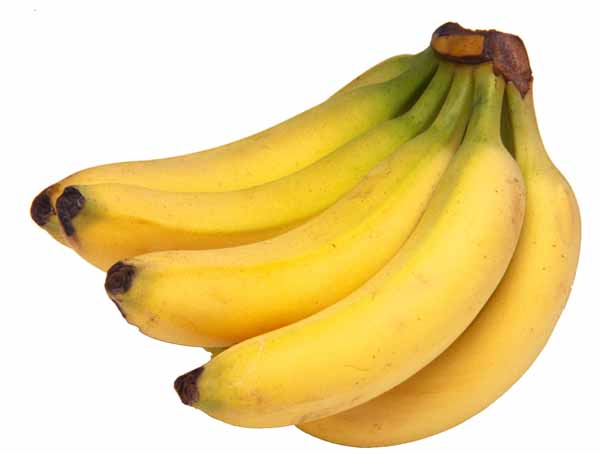
Investigation: Bananas and Pesticide Residues
Sweet, flavorful, fragrant, excellent tasting, nutritious, available year-round; it contains sugars, fiber, vitamins, and minerals, with an almost negligible fat content. Bananas are a universally popular fruit, with annual global production standing at 95.6 million tons . According to 2009 data published by the FAO ( Food and Agriculture Organization of the United Nations), the world’s largest producer is India , with 26.2 tons, but bananas mostly arrive on our tables from Central and South American countries such as Ecuador, Brazil, Mexico, Costa Rica, Colombia, and Honduras. Approximately 70% of global banana production occurs in the Americas: Ecuador alone produces a full 30% of all bananas arriving from this continent.
Modern banana cultivation relies on selected varieties descended from two wild species: Musa acuminata and Musa balbisiana . Plant propagation generally occurs through tissue culture or by taking vegetative fragments and planting them directly into the soil. This cultivation method results in the standardization of banana plants: they are very similar to one another, if not genetically identical . This is extremely dangerous, as a new or particularly pest-resistant pest can potentially destroy entire banana groves .
And this has already happened in the past: this is the case of the Gros Michel cultivar , susceptible to Panama disease , caused by a fungus ( Fusarium oxysporum ) that attacks the roots of the banana tree. Until the 1950s, Gros Michel was the most widely cultivated variety in the world, but it had to be abandoned due to the uncontrollable spread of the disease. Currently, the most widespread cultivar in the world is Cavendish , a familiar name in any Italian fruit and vegetable section. Some scholars warn: it is possible that within the next decade this cultivar could become extinct , precisely because of its lack of genetic diversity . The threats are posed, in addition to Panama disease , also by Black Sigatoka (another disease transmitted by a fungus) and by several serious viral diseases.
Here are the reasons why banana plantations are managed with the massive use of antifungal products : to prevent the spread of potentially destructive diseases. Among the most widely used are benzimidazoles , a category of systemic fungicidal pesticides widely used in agriculture for both in-field and post-harvest treatments ; their action allows for the control of a wide range of pathogens harmful to both the plant and the fruit itself. In particular, the benzimidazole family includes compounds such as thiabendazole ( TBZ), thiophanate-methyl (TM), and benomyl ; the latter, very quickly following its use, transforms into its derivative, carbendazim (MBC). Thiabendazole in high doses is toxic to humans, and high exposure can cause dizziness, loss of appetite, nausea, and vomiting. Chronic exposure , however, can cause growth retardation, as well as alterations to hematopoietic organs and bone marrow. Thiabendazole is an additive authorized by European legislation and is designated E233 : it is mandatory to indicate on the label (or on information labels) when a product is treated with this substance. According to Italian legislation, the maximum residue limit is 1 milligram/kg for carbendazole and 5 mg/kg for thiabendazole (Ministerial Decree 19 May 2000. Consolidated text on maximum residue limits of active substances contained in plant protection products ).
Since benzimidazoles are used in massive quantities, monitoring is essential to evaluate consumer exposure to these fungicides: exposure which, clearly, occurs through the possible ingestion of products (in this case, bananas) containing residues of pesticide treatments.
Scientific research on pesticide residues in bananas
It is interesting to mention the results of an Italian research carried out at the Department of Pharmaceutical Sciences of the University of Salerno, published in 2004 in the journal Food Chemistry [1] . The research examined 50 samples of bananas imported into Italy from Ecuador, Panama and Costa Rica during the two-year period 2002-2003, measuring the concentrations of three different types of fungicides commonly used in tropical plantations: benomyl and its metabolite carbendazim , thiabendazole and thiophanate-methyl .
Of the 50 samples analyzed, 34 showed no residues; five samples (10%) contained carbendazim , with concentrations generally below the 1 mg/kg threshold, ranging from 0.140 to 1.100 mg/kg. In 22% of the samples, or eleven of those analyzed in total, concentrations of thiabendazole ranging from 0.050 to 2.510 mg/kg were found, well below the threshold established by Italian legislation. Finally, no measurable concentrations of thiophanate-methyl were found in any sample . In essence, only two samples detected carbendazim concentrations exceeding the legal limit: the researchers therefore conclude by reassuring regular banana consumers and underlining the fact that the use of fungicides appears to be monitored and correctly managed by overseas producers.
Another work, published in 2009 [2] , concerned the presence of pesticides in bananas produced in the Canary Islands . The researchers focused on 11 different chemical products, analyzing 57 banana samples ; also in this case the results substantially highlighted the presence of residues lower than the thresholds established by law, with the exception of two samples in which fenitrothion was above the limit. Another compound, chlorpyrifos , was present in most of the samples, and this prompted the researchers to make a comparison between the quantities present on the peel and those in the pulp. The results demonstrated that most of this pesticide remains in the peel and that even at high surface concentrations (0.87 mg/kg) only 0.07-0.12 mg/kg of chlorpyrifos were found in the pulp. The researchers also in this case highlight that – in their own words – “ the levels of these residues cannot be considered a serious public health problem, in accordance with European regulations ”.
So, are bananas “safe” for consumers? It would essentially seem so.
And how do other fruits treated superficially with chemicals fare? The panorama is rather varied; a study carried out in Germany and published in 1999 [3] highlighted how the most abundant pesticides are thiabendazole and orthophenylphenol . Surprisingly, the researchers found higher concentrations in the peels of citrus fruits , compared to those of bananas and kiwis. So, can bananas be considered “safer” for health? Certainly one study is not enough to affirm this, and there is no reason to be happy about the fact that one fruit is less contaminated than others, but rather to be concerned about the widespread presence of residues on the fruit we habitually consume.
Fruit that, of course, is peeled, but how many of these pesticides pass into the pulp ?
Another study conducted in Germany [4] seems to be equally reassuring, and was carried out on 74 samples of bananas from different origins, with the aim of determining their thiabendazole content . The results showed that the majority of the analysed samples contained thiabendazole residues lower than 0.7 mg/kg in the peel, and 0.1 mg/kg in the pulp: well below the limits established by the health authorities (5 mg/kg). The researchers, studying the dynamics of transfer of the pesticide from the peel to the pulp, highlighted that through handling only minimal quantities of thiabendazole are transferred to the edible part of the fruit. And they add that, to be on the safe side, washing the fruit with warm water ensures that the residues “transferred” by hand are almost completely eliminated.
Environment and workers’ health: two neglected aspects
A research published in 2002 [5] presented the results regarding dermatitis among workers on banana plantations in Panama, attributable to the use of pesticides. The authors studied 281 workers , 227 of whom were employed in the field and the remaining 54 in charge of packaging the product. The former were exposed to a frightening range of pesticides ( propiconazole , maneb , chlorothalonil , dithane , dalaphon, ametrine and gramoxone ), and even those employed in the factory were not far behind in terms of exposure to various chemical products ( imxalil , thiabendazole , aluminium hydroxide solutions and formaldehyde ). A full 82% of workers suffered contact dermatitis on their hands, followed by thorax and abdomen (9%), legs and feet (5%), and even genitals (4%). In 85% of cases, the substances responsible for these conditions were identified as chlorothalonil , thiabendazole, imazalil , and aluminum hydroxide . The results speak clearly: contamination by fungicides and other pesticides is not only a potential problem for Western consumers, but one that seriously endangers the health of tens of thousands of workers, often underpaid and exploited by banana companies.
From this discussion, the environmental issue cannot certainly be ignored : the massive and continuous use of plant protection products poses a serious risk to the ecosystems of tropical areas affected by the presence of extensive banana plantations. A study published in 2000 [6] examined the pesticide residues present in the waters and sediments of the Suerte River basin in Costa Rica, the main emissary of the protected area of Tortuguero. In the surface waters , sediments and vegetation , various fungicides, nematicides and insecticides were ubiquitous and abundant; in the protected area, for example, 43% of the samples analysed were contaminated by propiconazole . The results certainly cannot be ignored, and the environmental impacts are notable: most of the pesticides detected represent a serious risk for aquatic organisms, both due to episodes of acute and chronic toxicity . Conservation of the environment, especially of areas of great biodiversity and ecological importance such as tropical and subtropical ecosystems, must necessarily involve reducing the use of chemicals on banana plantations.
Conclusions
According to the currently available scientific literature, no cases of serious contamination have been detected in bananas sold in Europe, either in the peel or in the edible part . Only in very rare cases have exceeded the legally established limits been reported, but these are sporadic events that should not alarm consumers.
Let us clarify: “values lower than the limits established by law” does not automatically mean “zero level”: a minimal part of pesticides remains , and no data is available regarding low-level, but chronic , exposure to active ingredients such as thiabendazole or other synthetic molecules.
Another important aspect to consider is the social and environmental impacts that are a direct consequence of the massive use of pesticides in tropical and subtropical countries. Skin diseases, poisoning, impaired organ function, as well as pollution, threats to biodiversity, and ecosystem loss: consumers must also be informed of these impacts so they can make an informed choice about whether , how much , and how to consume bananas and tropical fruit in general .
One environmentally sustainable choice, one that respects worker health and guarantees the total absence of pesticide residues, could be organic fruit . In this case, cultivation occurs without the use of pesticides, thus reconciling the three aspects described above.
Bibliography
[1] Veneziano Attilio, Giovanni Vacca, Swizly Arana, Francesco De Simone, Luca Rastrelli. 2004. Determination of carbendazim, thiabendazole, and thiophanate-methyl in banana ( Musa acuminata ) samples imported to Italy . Food Chemistry , 87(3), pp. 383-386.
[2] Hernández-Borgesa Javier, Juan Cabrera Cabrera, Miguel Ángel Rodríguez-Delgado, Estrella M. Hernández-Suáreza, Víctor Galán Saúcob. 2009. Analysis of pesticide residues in bananas harvested in the Canary Islands (Spain) . Food Chemistry , 113(1), pp. 313-319.
[3] Forster M., Vorkamp K., Taube J., Herrmann R. 1999. Contribution of southern fruit peels to the contamination of biological waste . Water Science and Technology , 40(1), pp. 371-377.
[4] Koniger M., Wallnofer PR 1993. Studies on the fate of thiabendazole in bananas . Deutsche Lebensmittel-Rundschau , 89(12), pp. 384-385.
[5] Penagos Homero. 2002. Contact dermatitis caused by pesticides among banana plantation workers in Panama . International Journal of Occupational and Environmental Health , 8(1), pp. 2-6pm.
[6] Castillo Luisa E., Clemens Ruepert, Efrain Solis. 2000. Pesticide residues in the aquatic environment of banana plantation areas in the north Atlantic zone of Costa Rica . Environmental Toxicology and Chemistry , 19(8), pp. 1942-1950.
Websites to consult
Pesticides on the plate 2010
http://www.legambiente.it/dettaglio.php?tipologia_id=10&contenuti_id=1101
Legambiente’s annual dossier: “How many and what are the pesticide residues that contaminate the fruit, vegetables and processed products that end up on our tables?”.
Recommended reading
(in English)
- Title: Banana: The Fate of the Fruit That Changed the World
- Author: Dan Koeppel
- Publisher: Penguin Group USA, Inc.
- Year: 2009
- Length: 281 pages
- Title: Banana cultures: agriculture, consumption, and environmental change in Honduras and the United States
- Author: John Soluri
- Publisher: University of Texas Press
- Year: 2005
- Length: 321 pages
- Title: Banana wars: power, production, and history in the Americas
- Series: American encounters/global interactions
- Authors: Steve Striffler, Mark Moberg
- Editors: Steve Striffler, Mark Moberg
- Publisher: Duke University Press
- Year: 2003
- Length: 364 pages


Pardon.. letto male! Chiedo scusa.
5 mg/kg per il thiabendazolo (D.M. 19 maggio 2000. Testo unico sui limiti massimi di residui di sostanze attive contenute nei prodotti fitosanitari).–
thiabendazolo comprese fra 0.050 e 2.510 mg/kg, ben al di sotto della soglia prevista dalla legislazione italiana
i sembra che la seconda percentuale sia ben al di sopra del consentito di ben 5 volte.