

Cosa fare in caso terremoto
I terremoti sono la diretta conseguenza del fatto che il pianeta Terra non è inerte come potrebbe apparire in superficie, ma ancora molto attivo dal punto di vista geologico e tettonico. La crosta terrestre è infatti suddivisa in numerose placche tettoniche che si possono considerare come grandi “zattere” – spesse dai 10 ai 15 km circa – che galleggiano al di sopra del mantello. I terremoti sono causati dall’accumulo di tensione e dall’improvviso rilascio di energia che avviene lungo le faglie, ovvero i punti di contatto fra una placca tettonica e l’altra.
Le zolle tettoniche infatti sono in continuo movimento l’una rispetto all’altra e questo movimento si può “inceppare” proprio come potrebbe accadere quando spostiamo uno scatolone pesante su un pavimento ruvido. Se lo scatolone non scorre più, continuando a spingerlo ad un certo punto esso si sbloccherà improvvisamente nel momento preciso in cui la forza applicata supererà la resistenza causata dall’attrito. I terremoti si comportano esattamente allo stesso modo: più tensione viene accumulata e più potenzialmente distruttivo sarà l’evento sismico generato.
Altre possibili cause di terremoti, oltre a quelle che riguardano la tettonica a zolle, possono essere dovute ad esempio al movimento del magma che precede le eruzioni vulcaniche, al crollo di grotte sotterranee oppure al movimento e all’accumulo di grandi masse di acqua all’interno di bacini artificiali. Si tratta, comunque, di eventualità piuttosto rare, almeno nel nostro territorio. Decisamente più infrequenti sono, infine, i terremoti intraplacca che avvengono all’interno delle placche tettoniche e non lungo le faglie.
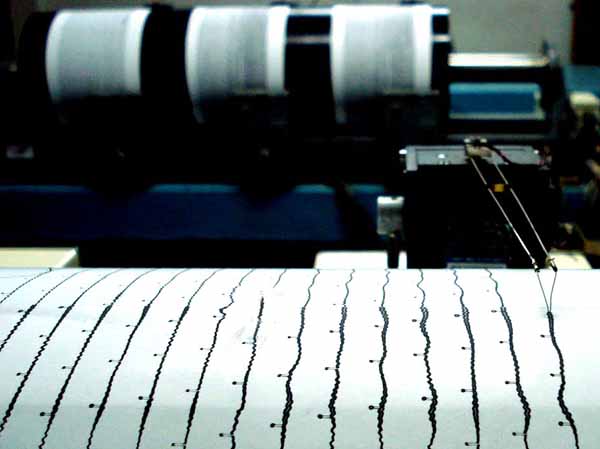
The precise point within the crust where this energy is released is called the hypocenter , while its projection onto the Earth’s surface is called the epicenter . Earthquakes are measured according to various scales: the most widely used is the Richter scale , based on the energy released during a seismic event. In Italy, the Mercalli scale was also used , based not on energy but on the damage caused by the earthquake to buildings and people. Since it is an imprecise scale and its values are not comparable from one area to another, the Mercalli scale has been progressively abandoned.
Earthquake prevention: what to do before an earthquake
The correct behaviors to adopt begin well before the possible earthquake : it is a series of practical and common sense indications that require minimal effort, and that we should all consider.
First, you should find out which seismic zone your municipality of residence is classified in, as explained in detail in the last section of this guide. It ranges from “Zone 1,” the highest risk zone, to “Zone 4,” considered the safest. It’s also a good idea to find out about the agencies responsible for dealing with earthquake emergencies (e.g., Civil Protection, municipal services, etc.) and where residents can gather.
It’s important to pay attention to all earthquake precautions in workplaces and schools, learning about emergency evacuation plans and memorizing the closest emergency exits to your office or classroom. Many schools and public institutions, for example, conduct periodic drills to ensure occupants know what to do in the event of an earthquake or other disaster.
How to protect yourself from earthquakes at home
Most people believe that the greatest danger in an earthquake is the collapse of buildings. This isn’t entirely true, as many casualties are actually caused by falling objects such as furniture, mirrors, shelves, and so on, even if the building remains perfectly structurally intact. To avoid becoming a victim of these fatalities, just follow a few simple precautions.
At home, it’s best not to place particularly bulky or cumbersome objects on high shelves, as tremors could cause them to fall on people. For the same reason, it’s also good practice to secure all heavy furnishings (bookcases, shoe racks, shelves, etc.) to the walls using special wall nails. Paintings and other objects should be hung on the wall using special closed hooks , which prevent them from detaching from the wall. It can also be helpful to secure ornaments on high shelves with drawing pins or double-sided tape.
It’s also important to keep kitchen cabinets and doors closed with special latches to prevent them from opening and, consequently, plates, glasses, and other objects from falling on people. These latches are the same ones used, for example, to prevent small children from opening cabinets.
In an easily accessible area of the house, close to the front door, it’s also a good idea to keep a small first aid kit and a flashlight (remembering to check the batteries regularly) for emergency access. If possible, it’s also a good idea to equip this emergency kit with a battery-powered radio and, if necessary, a small portable fire extinguisher .
It’s possible that more recently constructed buildings are designed with earthquake-resistant criteria in mind , and in that case, you can feel safe inside your home during an earthquake. Unfortunately, despite the high seismic risk, in our country there are still few buildings constructed with these criteria, so it’s likely that your home is “at risk . “
If so, it’s a good idea to inquire about the possibility of carrying out structural work to make your home more earthquake-resistant by accessing funds allocated by the government and local authorities for the recovery and redevelopment of building stock. Furthermore, it’s worth remembering that, according to a recently approved decree that makes these incentives structural, it’s currently possible to benefit from a 36% IRPEF tax deduction on expenses incurred for these works.
Finally, since household systems could be damaged by earthquakes, it’s important to know where the gas and water taps and the main electrical switch are located , and how to turn them off in the event of an earthquake. This will help prevent explosions due to gas leaks, flooding, and the risk of short circuits or electrical shock.
Rules of conduct in the event of an earthquake
Since most of Italy is subject to varying degrees of seismic risk , it’s important for the public to know how to respond in the event of an earthquake. Being able to address this sudden emergency situation can mean the difference between life and death, not only for oneself but also for those around us.
The key is to remain calm : panicking is a mistake we must not make. Even in the case of moderate earthquakes, without any damage to buildings and infrastructure, people often suffer injuries caused by panic, such as falling down stairs or being trampled by people pushed by crowds. We therefore reiterate the concept that remaining calm at all times is the first thing to do.
When you feel an earthquake inside a building, you should seek shelter behind a door in a load-bearing wall, in a recess in a wall, or under a thick beam : these are the strongest structural elements of a building, offering the greatest resistance to collapse. If this is not possible, it’s a good idea to seek shelter under a table or sturdy piece of furniture. Since furniture and furnishings can fall from walls, it’s best to stay away from bookcases, shelves, or other furnishings; glass can shatter due to the vibrations, so you should also stay away from glass doors and windows .
Avoid any hasty escapes down the stairs , as these architectural elements are the weakest link in buildings and are prone to collapse. Even worse is attempting to use the elevator to escape, as any power outages or structural damage could block it, turning it into a veritable trap.
If you’re outdoors during an earthquake, the risks are lower, but you still need to adopt certain precautions. First, avoid staying near beaches and lakes , as the earthquake could trigger sudden and devastating tsunami waves .
Buildings, pylons, overpasses, bridges, and other infrastructure , as well as centuries-old trees and landslide-prone terrain, could be subject to collapse or subsidence . Therefore, it’s important to stay away from them not only during an earthquake, but also after it has passed. Also be wary of collapsing cornices, chimneys, gutters, flowerpots, or roof tiles. If you’re on the street, absolutely avoid seeking shelter under buildings or balconies. It’s better to stay under a doorway instead .
What to do when the shock is over
Before leaving the building, remember to turn off the gas and water taps and disconnect the electricity . If you are inside a public place or a school, follow the procedures set out in the emergency plan . It is extremely important to always wear shoes , as bare feet could be injured by debris or shards of glass falling on the floor or in the street.
Once the tremors have stopped, avoid approaching potentially dangerous areas and refrain from using your car so as not to hinder any rescue operations. For the same reason, it’s best not to clog up telephone lines and use your phone only for emergency calls .
Finally, to avoid hindering rescue efforts, in the event of a severe earthquake, stay away from areas affected by collapse and, if possible, try to reach the “safe” assembly areas designated by the municipal emergency plan. Even if you’re unsure of where these areas are, it’s still good practice to move away from buildings and toward open spaces such as a city park, a square, or a wide road. Naturally, you should consider the height of surrounding buildings and their distance from your location.
If there are other people nearby, check their well-being and, if necessary, call emergency services. If there are serious injuries, absolutely do not attempt to move them (unless they are in danger, for example, due to collapses), as this could worsen their condition. This is especially true for people who are unconscious, have fractures, or are suffering from severe bleeding.
Seismic risk areas in Italy
Only a few areas of our country can be considered relatively “safe” from earthquakes . Most of the country is in fact subject to some risk due to the presence of a long active fault line located in the convergence zone between the Eurasian and African plates. Due to its unique location, Italy is one of the Mediterranean countries most exposed to seismic risk , and as we well know, numerous catastrophic events have been recorded in the past, both distant and recent.
Only Sardinia is theoretically not subject to earthquakes, while all other Italian regions experience varying levels of seismic risk. The area with the highest seismic activity is the Apennine ridge , particularly its central-southern portion, stretching from the Magra Valley to Irpinia, passing through Mugello, the Nerina Valley, the Tiber Valley, the L’Aquila area, Fucino, the Benevento area, and the Liri Valley.
Other areas considered at risk include Sicily and Calabria , and some northern regions such as Friuli Venezia Giulia , eastern Veneto , and western Liguria . An overview of seismic risk in Italy and beyond can be found on the Civil Protection website.
Seismic classification
In Italy, in particular, there is a seismic classification that divides the national territory into four zones depending on the risk:
- Zone 1 : this is the most dangerous of all, where very strong earthquakes can occur, and includes 725 Italian municipalities.
- Zone 2 : In this area, which includes 2,344 Italian municipalities, medium-high intensity earthquakes are possible.
- Zone 3 : the 1,544 Italian municipalities located in this zone are subject to seismic events of modest intensity.
- Zone 4 : This is the least dangerous zone overall, with relatively low risk of damage from seismic events; it includes 3,288 Italian municipalities.
By connecting to the Civil Protection website it is possible to find out which Seismic Zone your area of residence falls into by downloading the .pdf and .xls documents relating to the Seismic Classification of Italian Municipalities , divided by Region or listed by Municipality.
The printable version (.pdf) of a useful seismic hazard map of the national territory , edited by the INGV ( National Institute of Geophysics and Volcanology ), is available online.
Learn more about earthquake prevention and how to behave in the event of an earthquake.
Websites
- Department of Civil Protection – Seismic Risk: What to Do
- Earthquake – How to behave in case of an earthquake
- Gaib – Earthquake: rules of conduct
- Emilia-Romagna Region Civil Protection Earthquake Brochure (.pdf file)
Video
- Earthquake Behavior – Fire Prevention Video Course
- Civil Protection Cantalice (Ri) – Safe Schools in the Event of an Earthquake
- Self-protection behaviors in the event of a seismic event and municipal emergency plan
Books
- Earthquake Lessons: What to Do If the Earth Shakes (Educational Book for Children) – Author: Roberto Luciani – Publisher: Giunti Editore – Year: 2003
- Personal Safety Manual. Urban Survival – Authors: Chris McNab, Joanna Rabiger – Publisher: Edizioni Mediterranee – Year: 2004