

We can try to solve this problem with a balcony photovoltaic kit , thus optimizing costs and being more environmentally friendly. But it’s important to understand which appliances consume the most and to what extent.
Energy-intensive appliances: what does that mean?
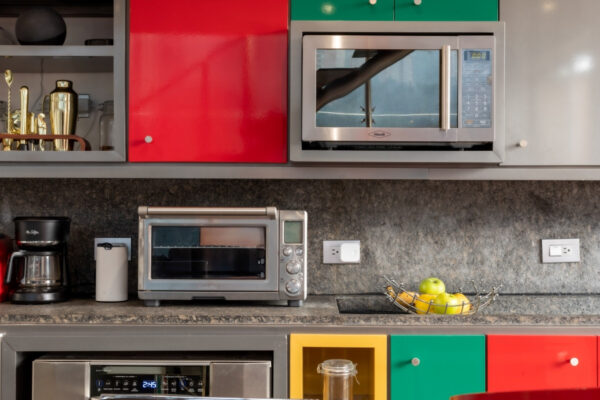
Managing energy in our homes depends primarily on awareness. This means we should pay more attention to our consumption: do we know which appliances consume the most? Are we talking about the latest-generation models? Have we taken care of their maintenance over time to maintain high performance? These are obvious questions, but they are important for understanding consumption. The appliances we have at home consume a lot of energy, which is why they are called energy-hungry. But to save on our bills and reduce our carbon footprint, we need to understand some essential factors. From air conditioning to washing machines, from microwaves to electric ovens, we want to provide a comprehensive overview of the appliances we all have at home and use daily. Or, as in the case of the refrigerator, we use continuously.
How much does the refrigerator consume?
This appliance is the main culprit in terms of energy consumption. The refrigerator is always on, constantly consuming energy to maintain an ideal internal temperature. However, according to experts, replacing older appliances with more energy-efficient models can lead to significant savings. Furthermore, optimal temperature regulation may be helpful, and maintaining door seals in good condition can help reduce consumption. Statistics show that the refrigerator accounts for 25% of total energy consumption. To reduce your energy bill, you should opt for a class A refrigerator and freezer.
Washing machine and dryer, consumption
Let’s look at washing machines and dryers, appliances that require a considerable amount of energy. Beyond that, to optimize consumption, we can do laundry in the evening, thus saving money. We can also choose to use the washing machine at 30°C and do eco-friendly washes. But washing machines also consume a lot of energy. Taking an average of 260 cycles per year, a class A washing machine costs us approximately €63 on our electricity bill.
Air conditioning, how much does it cost us?
The use of air conditioners represents another significant source of energy consumption. Programmable temperature controllers and adequate room insulation can, however, help reduce consumption. Indeed, air conditioners are one of the most used appliances, but not only that: they are also the ones that consume the most, costing around €120 per year. However, it impacts not only our bills but also the environment. What can we do? In this case too, we should opt for a class A air conditioner and perhaps consider a photovoltaic kit to power it.
Oven, consumption
Electric ovens can consume a significant amount of energy, especially when used at high temperatures. Using your oven wisely, choosing more efficient cooking options like steaming or using the microwave, can help optimize consumption. Let’s look at an example to understand its impact on your bill: if we used it for five minutes a day, we would spend about €30 on our bill. Keep in mind that the higher the temperature, the greater the consumption.
How much does the hairdryer consume?
Let’s look at an indispensable appliance that we all obviously have at home: the hair dryer. Unfortunately, it ranks second among appliances that consume the most energy. The reason? It draws more than 2,000 watts. And its environmental impact is also significant.
How to identify energy-efficient appliances?
When purchasing new appliances, it’s important to pay attention to the energy label, as it provides information on the appliance’s energy consumption, allowing us to compare available options. In this regard, we should prefer appliances with energy efficiency labels of A+++ or A++, which are the most efficient. To put savings into perspective, the A++ class consumes 50% less; the A+++ class consumes 60%. If you have older, inefficient appliances in your home, it’s time to replace them. The initial investment may seem steep, but consider the savings you’ll see in the long run.
How to reduce energy consumption?
Reducing the energy consumption of appliances is an important step towards reducing our energy footprint and contributing to environmental sustainability. Fortunately, many small actions can make a difference. In addition to choosing energy-efficient appliances, we should also consider incorporating good habits. For example, turning off appliances when we’re not using them, making sure to unplug them. Instead of turning on lights, we could favor natural light during sunny hours, or consider using energy-efficient LED bulbs. If we want an even clearer picture, consider installing an energy monitoring system. They’re useful because they allow us to track consumption and identify areas where further reductions are possible.
Consider other energy sources
There are other solutions we can explore. For example, consider installing a photovoltaic system to generate clean, renewable energy for your home. The savings, in these cases, can be significant and significant. For example, during the day we could use the energy produced by the photovoltaic system, without having to rely on the distribution grid, saving on our bills and supporting the environment. Another aspect to consider is a photovoltaic storage system. This, in fact, has the primary function of storing excess energy that is not immediately consumed. It is absolutely recommended for large families, who therefore require significant consumption to meet everyone’s needs. At the same time, by storing energy, we not only always have a source to draw from, but we can also resell it. Consider that, for example, a 3 kW photovoltaic system without storage allows us to save around €450 per year. A great way to reduce your bills, but also to embrace a greener philosophy and support the environment and our wonderful planet.

