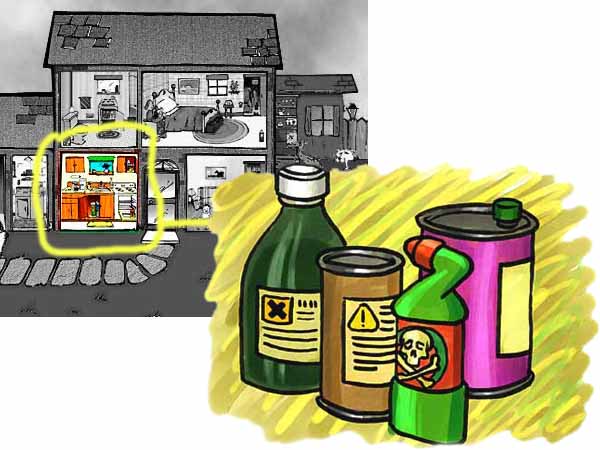
Poisons in the Kitchen: Children and the Risk of Poisoning
We often live with the belief that homes are a safe and supervised place for children , but this isn’t always true. Detergents , drain cleaners , insecticides , antibacterials , and deodorants are just some of the dangers lurking in the various rooms of the house.
Those most at risk of poisoning are children under five years of age, an age group in which approximately 80% of accidental ingestions of household chemicals occur. The peak incidence of these poisonings is between one and a half and three years of age; moreover, nearly 90% of these events occur within the home . In addition to children’s innate curiosity and tendency to explore their surroundings with their mouths (the so-called “oral phase”), it is often the packaging itself that attracts little ones’ attention. Bright colors and curious shapes are an irresistible lure for children who may escape their parents’ vigilance.
To avoid unnecessary risks, it’s best to pay close attention to where these products are stored. If possible, store these dangerous products in cabinets and shelves well out of the reach of children, or keep them locked up .
Health and safety hazards in the kitchen
But what are these fearsome chemical enemies that threaten our health in the kitchen? They’re insidious and undetectable, hiding in seemingly “useful” and housewife-friendly containers of products that facilitate kitchen cleaning and maintenance: detergents and cleaners, descalers and drain cleaners, insecticides and insect traps: useful but dangerous!
Hand dishwashing detergent
Dish soap is one of those products found in practically every kitchen, regardless of whether they have a dishwasher or not. Fortunately, this type of detergent generally has low acute toxicity ; this means that large quantities must be ingested orally to cause respiratory or, more commonly, gastrointestinal irritation.
The most common symptoms of poisoning include stomach and abdominal pain, nausea, vomiting, and diarrhea. However, due to their formulation, these products are never fatal. Poisoning can also result from inhaling the foam , which can then lodge in the lungs, resulting in suffocation.
Dishwasher detergent
Although they are essentially detergents designed for the same purpose, this category of products is much more dangerous than the previous one. Dishwasher detergents are extremely concentrated , so accidentally ingesting even small quantities can cause serious poisoning. The dangers arise not only from ingestion, but also from contact with the skin and mucous membranes of the mouth and throat; in this case, irritation, burns, and superficial lesions are possible.
Surface cleaners
These products are extremely versatile and are used to clean various kitchen surfaces, such as hobs, tables, tiles, or sinks. The substances present in these types of products can vary greatly, but they can be classified into categories such as solvents, detergents, degreasing agents, solvents, and possibly disinfectants. Specifically, the hazardous substances contained in surface cleaners include ammonia , trisodium phosphate , diethylene glycol monobutyl ether , ethylene glycol monobutyl acetate , and sodium hypochlorite .
Depending on the chemicals they contain and their concentration, all-purpose cleaners can cause irritation to the mucous membranes of the nose and throat, as well as to the eyes and skin. If accidentally ingested, these products can be highly toxic , and it is essential to contact a poison control center immediately, bringing the cleaner container with you so that health professionals can respond effectively.
To avoid problems, it’s essential to store these products out of the reach of children, and remember that pets may be attracted to them because of the smell. Furthermore, when using them, it’s always a good idea to wear rubber gloves to protect your skin, and if possible, ventilate the area to prevent the product from evaporating and accumulating in the air. It’s also essential to never mix different cleaning products, as this could release dangerous gases due to spontaneous chemical reactions between the ingredients.
In particular, if detergents contain ammonia and sodium hypochlorite, a gas known as chloramine can be produced, which is extremely toxic and can even be lethal in high doses. Furthermore, if the products are concentrated, actual “ explosions ” can occur in the mixture, with the added risk of being hit in the face and eyes by highly corrosive splashes.
Antibacterial disinfectants
Antibacterial disinfectants are specifically formulated to remove dirt and, often, eliminate microbes and bacteria. These products are typically in spray or liquid form, and are frequently used in the kitchen due to the presence of food and the potential for contaminating surfaces such as sinks, tables, or counters on which unclean objects (such as shopping bags or food packaging) may be placed. Furthermore, these disinfectants are essential for cleaning surfaces where raw foods have been placed, especially meat, which can have a significant bacterial load, especially when thawed.
Chemically speaking , these sanitizing detergents typically consist of an aqueous solution containing surfactants, fragrances, and, of course, the active ingredient with antibacterial action. Compounds such as quaternary ammonium salts and phenols are very common. Since the use of these products can cause irritation to the eyes, throat, and skin, due caution must be taken and rubber gloves must always be worn. In case of accidental contact with skin or mucous membranes, rinse immediately with plenty of water.
Antibacterial products are often overused , not only in the kitchen but also in other rooms of the house, such as the bathroom. In most cases, unless you have extreme hygiene requirements (such as with newborns), these products can be easily replaced with simple warm water and soap, or even ethyl alcohol.
Oven cleaning products
Specific oven cleaning products are specially formulated to dissolve and remove cooking residue (especially grease) that sticks to the oven walls. The most common active ingredient in these products is caustic soda ( sodium hydroxide or potassium hydroxide ), a powerful corrosive that can cause skin burns, irritation of mucous membranes, and blindness if it comes into contact with the eyes. If ingested, caustic soda can also be fatal, especially for young children.
To safely use oven cleaning products, it’s essential to ventilate the kitchen by opening doors and windows wide, possibly turning on fans to disperse any fumes released. It’s always a good idea to wear rubber gloves and an apron to protect your clothing, and, if necessary, protective eyewear .
Alternatively, you can use caustic soda-free oven cleaners , which are readily available on the market, or—even better— natural detergents . Among the most suitable, completely harmless and 100% eco-friendly, are hot water, baking soda, white vinegar, sodium borate ( borax ), or lemon juice. Using these will probably require a little more effort, but at least you’ll avoid the health risks. Furthermore, you’ll save a lot of money, since oven cleaners are usually quite expensive. A tip: to avoid excessive effort to remove long-standing grime, it’s recommended to clean the oven after each use .
Insecticide spray
Unfortunately, the kitchen is the room in the house most affected by the presence of welcome guests such as ants, cockroaches, flies, and wasps attracted by the presence of food. Therefore, it is very common to resort to insecticides , often in the form of sprays, to keep insects away. Before purchasing (and using) these products, it is essential to read the label with the indications and instructions for use, since not all of them can be used in the home, and even more so in the kitchen. In fact, some insecticides are designed exclusively for external use.
These products contain numerous active ingredients with insecticidal action , such as diazinon , permethrin , propoxur , and chlorpyrifos . Especially when insecticides are used indoors, it is important that they do not come into contact (either directly or in spray form) with household objects; in the kitchen, in particular, the risk of contaminating dishcloths, cutlery, pots and pans, dishes, or surfaces where food is placed is high. Furthermore, insecticides can be irritating to the eyes and mucous membranes and cause contact lesions on the skin.
It’s always a good idea to open kitchen doors and windows wide before using these products, especially if they come in spray form. It’s also advisable to wear a mask and gloves , and to thoroughly wash any body parts that accidentally come into contact with them. To combat insects, it’s recommended to address the root cause: regularly and thoroughly cleaning the kitchen of all food residues prevents insects from being attracted there.
Insect traps
Similarly to insecticide products in powder or spray form, insect traps are used to eliminate these unwelcome guests, but this time by killing them with food baits soaked in poison . The active ingredients contained are typically
- propoxur
- sulfuramide
- trichlorophenol
- chlorpyrifos
- boric acid
Cockroaches, but especially ants, leave a scent trail that alerts their fellow ants to the presence of the bait; in this way, traps can eliminate or significantly reduce the entire community.
To be effective, these poisoned baits must be “appetizing”: as long as insects can find crumbs, open packages, or food scraps in the kitchen, they probably won’t even come near the traps. Cockroaches and ants can only be eliminated if traps are the only available alternative : even in this case, therefore, cleanliness and hygiene in the home are essential.
Since the traps contain the poison inside, the danger to people and pets is usually very low (unless, of course, you try to open them). However, as a precaution, it’s recommended to keep animals away and handle these traps with gloves, placing them away from food and eating utensils.
Drain cleaner
Kitchen drains can often become clogged due to food residue removed from dishes and kitchenware. In this case, drain cleaners are usually based on caustic soda or sulfuric acid , powerful corrosive substances with an alkaline or acidic pH, respectively. These compounds are extremely dangerous and must be handled with care, as their use can cause toxic gases to build up in the environment. These corrosive products can cause skin contact and burns, while contact with the eyes is even more serious, potentially causing blindness . If accidentally ingested , especially by children, drain cleaners can also cause fatal poisoning.
To avoid any risk, it is essential to handle these products with protective gloves and ventilate the area to avoid breathing in the toxic fumes. It is important to never mix these products with other substances, as this could trigger uncontrolled and very dangerous chemical reactions.
Drain unclogging products , in addition to being potentially dangerous to people, are harmful to the environment and should be used sparingly, only when absolutely necessary. A further disincentive to using these products is their considerable cost, and the fact that their prolonged use can cause significant damage to pipes. Excellent natural alternatives to chemical unclogging products include, for example, the periodic use of boiling water mixed with salt and baking soda. Another effective method is to pour boiling vinegar dissolved in a few tablespoons of salt down the kitchen drain once a week.
Learn more and avoid chemical risks in the kitchen
The dangers associated with chemicals in the kitchen, what to do in case of poisoning, and possible natural and ecological alternatives:
Dr. Angelo Cantarelli – How to Protect Your Pet from Poisons
Industrial Cleaning – Detergents: The Risks of Mixing Chemicals During Cleaning
How to – How to clean your oven with natural products
All Green – Natural Drain Unblocker: Eco-Friendly Solutions for Sink Clogs